
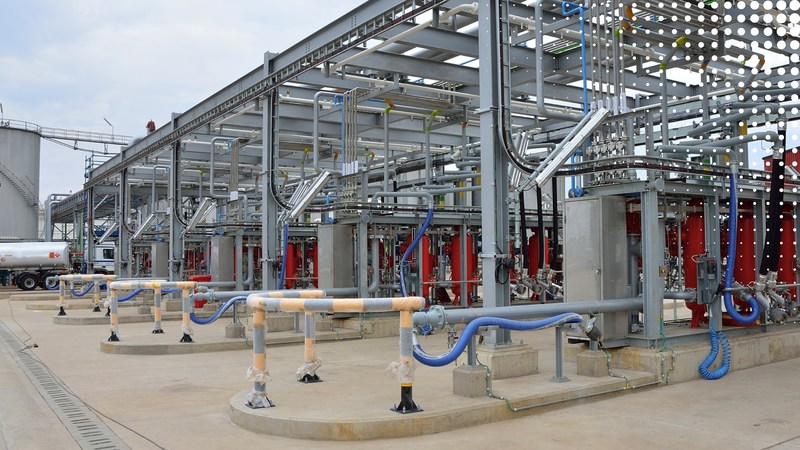
How Continuous Pressure Monitoring is Redefining Vapor Management at Loading Racks
How Continuous Pressure Monitoring is Redefining Vapor Management at Loading Racks
Across gasoline bulk liquid terminals, truck loading racks sit at the intersection of operational throughput, environmental risk, and regulatory scrutiny. Every loading event displaces hydrocarbon vapors that must be captured, routed, and controlled through vapor collection. When these systems perform as designed, emissions are minimized and operations run efficiently. When they don’t, the consequences can be immediate: product loss, safety concerns, and regulatory exposure.
The challenge facing operators today is not simply whether a vapor control system is installed, it’s whether it is functioning correctly, continuously, and in a way that can be proven with data. Many legacy systems were built around intermittent checks, manual gauges, or loosely integrated instrumentation. These approaches leave critical gaps. Pressure excursions can occur in seconds, pressure taps can become obstructed, and system imbalances can go undetected until they result in emissions or operational disruption.
This is the gap that modern regulation is designed to close.
A New Regulatory Standard: Continuous, Verifiable Performance
The 40 CFR Part 60, Subpart XXa, issued by the U.S. Environmental Protection Agency, represents a fundamental shift in how vapor control compliance is defined and enforced. Applicable to bulk gasoline terminals constructed or modified after June 10, 2022, the rule moves the industry away from equipment-based compliance toward continuous, performance-based verification.
At its core, the regulation is designed to ensure three outcomes:
- Detection of improper vapor collection system operation
- Prevention of sustained positive or negative pressure excursions
- Creation of auditable, continuous operating records
These objectives reflect a broader trend in environmental regulation: one that prioritizes real-time visibility and defensible data over static design assumptions. As outlined in Cimarron’s CPMS controls framework, compliance is no longer about having the right equipment in place; it is about demonstrating, continuously, that the system is working as intended.
Pressure as the Primary Indicator of System Performance
A central concept within Subpart XXa is the use of pressure as a direct proxy for vapor collection system effectiveness. Under § 60.502a(h), the regulation establishes a strict performance threshold: during loading operations, vapor collection and loading equipment must prevent gauge pressure in the cargo tank from exceeding 18 inches of water (460 mm H₂O).
This limit is not advisory; it is absolute. Any exceedance indicates that the system is not properly balancing or processing displaced vapors. In practical terms, pressure becomes the most immediate and measurable indicator of whether emissions are being controlled.
At the same time, the regulation implicitly recognizes that both ends of the pressure spectrum matter. Positive pressure excursions may indicate restrictions or undersized vapor handling capacity, while negative pressure conditions can suggest leaks, improper connections, or excessive vacuum. Both scenarios point to system imbalance and potential emissions risk.
This framing elevates pressure monitoring from a secondary measurement to a mission-critical control parameter.
Continuous Pressure Monitoring Systems
To enforce this performance standard, § 60.504a(d) requires operators to install, operate, and maintain a Continuous Pressure Monitoring System (CPMS). This is not simply a recommendation to measure pressure, it is a detailed, prescriptive requirement that defines how measurement must occur, how data must be handled, and how systems must be maintained.
The regulation mandates that CPMS solutions must:
- Measure pressure across the vapor collection system with sufficient range and precision (up to ~500 mm H₂O with tight tolerance)
- Be installed as close as possible to the cargo tank connection point to ensure representative readings
- Provide continuous monitoring during operations
- Be reviewed daily to confirm expected pressure behavior during loading
- Undergo annual calibration and periodic inspection
- Enable rapid detection and correction of faults, including plugged pressure taps or sensor failures
These requirements fundamentally change the role of monitoring systems. They are no longer passive instruments, they are active components of compliance, responsible for both measurement and validation of system integrity.
Daily review requirements are particularly important. Operators must confirm that pressure readings fluctuate in a manner consistent with active loading, which serves as a built-in diagnostic for system health. If pressure does not respond dynamically, it may indicate a blocked sensor, a failed transmitter, or a disconnected system. All of which must be addressed within a defined timeframe.
This introduces a new operational discipline: monitoring systems must not only capture data, but also prove their own reliability on an ongoing basis.
Integrating Control: From Detection to Enforcement
Monitoring alone is insufficient if it does not translate into action. The regulatory framework implicitly requires that systems respond to unsafe or non-compliant conditions in real time.
This is where modern CPMS architectures, such as those developed by Cimarron, extend beyond measurement into integrated control. By embedding logic directly into the system, operators can ensure that pressure conditions actively govern loading operations.
In practice, this includes:
- Real-time pressure thresholds tied to warning and shutdown conditions
- Automatic removal of “permit to load” when high-high or low-low pressure limits are reached
- Immediate response to sensor failures or system faults
- Integration with emergency stop systems to enforce safe shutdown states
For example, high-high pressure thresholds are typically aligned with the regulatory maximum (~460 mm H₂O), ensuring that loading operations cannot continue once compliance is at risk.
This transforms compliance from a retrospective activity into a real-time enforcement mechanism, where the system itself prevents non-compliant operation.
System Integration: Embedding Compliance into Operations
Another critical evolution under Subpart XXa is the expectation that monitoring systems are fully integrated into loading rack operations. CPMS solutions are no longer standalone devices, they must interact directly with truck rack control systems, PLCs, and operational workflows.
This integration enables:
- Permit-to-load interlocks governed by real-time pressure conditions
- Continuous communication between rack operations and monitoring systems
- Visibility into system status, alarms, and health indicators across the control environment
The result is that compliance becomes embedded within the operational fabric of the facility. Operators are not required to interpret external data or manually intervene—system logic ensures that loading can only proceed under compliant conditions.
This approach reduces human error, increases consistency, and aligns operational decisions directly with regulatory requirements.
Designing Within a Controlled Pressure Envelope
The regulatory framework also defines constraints on pressure-vacuum relief valves (PVRVs), which serve as a secondary safety mechanism. Under § 60.502a(i), PVRVs must not open below specified pressure or vacuum thresholds, ensuring that vapor containment is maintained during normal operations.
This creates a clearly defined pressure envelope:
- CPMS ensures pressure remains within acceptable operating limits
- Control logic prevents operation outside those limits
- PVRVs act only as a safeguard under extreme conditions
From a design perspective, this coordination is critical. Systems must be engineered so that normal operation remains well within the PVRV activation range, while still providing sufficient protection against abnormal events.
Data, Auditability, and the New Standard of Proof
Perhaps the most significant implication of Subpart XXa is the emphasis on data as proof of compliance. Operators must not only monitor pressure, they must maintain structured, auditable records that demonstrate ongoing system performance.
Modern CPMS solutions address this through continuous data capture, event logging, and system diagnostics. This could potentially include:
- High-resolution pressure data recorded over time
- Alarm and shutdown event histories
- Calibration and maintenance records
- System health indicators, including communication and memory status
These records enable operators to demonstrate compliance during audits, investigations, or internal reviews. They also provide valuable operational insight, allowing teams to identify trends, diagnose issues, and optimize system performance.
In effect, compliance data becomes an operational asset, not just a regulatory requirement.
From Compliance Burden to Operational Advantage
While Subpart XXa introduces new complexity, it also creates an opportunity. Operators who adopt integrated, intelligent CPMS solutions can move beyond reactive compliance and toward proactive control.
The benefits extend well beyond regulatory alignment:
- Reduced emissions risk through early detection and automated response
- Improved safety via enforced operating limits and shutdown logic
- Greater uptime and reliability through system diagnostics and integration
- Streamlined reporting and audit readiness through structured data capture
Cimarron’s CPMS approach is designed to bridge this gap—translating regulatory requirements into practical, automated systems that enhance both compliance and performance.
Why Cimarron: Turning Compliance into Performance
Cimarron is helping operators move beyond checkbox compliance toward fully integrated, performance-driven vapor control systems. Our Continuous Pressure Monitoring Systems (CPMS) are engineered to align directly with the requirements of 40 CFR Part 60, Subpart XXa, while embedding compliance into the core of your operations, not layering it on after the fact.
What differentiates Cimarron is not just measurement: it’s control, integration, and accountability:
- Built-for-compliance architecture
Designed to meet EPA requirements for continuous monitoring, precision measurement, daily validation, and auditable recordkeeping. - Real-time operational enforcement
Integrated logic that actively governs loading operations, automatically preventing non-compliant conditions before they occur. - Seamless system integration
Native connectivity into truck rack PLCs, SCADA systems, and facility workflows, embedding compliance into how your site actually runs. - Defensible, audit-ready data
Continuous recording, alarm tracking, and system diagnostics that stand up to regulatory scrutiny. - Scalable, field-proven deployment
From single-bay retrofits to multi-bay terminal systems, Cimarron delivers solutions that scale with your operations.
In a regulatory environment where proof of performance matters as much as performance itself, Cimarron provides the infrastructure to deliver both. Whether you’re evaluating compliance readiness, upgrading legacy systems, or designing a new terminal, Cimarron can help you align with evolving EPA requirements while improving operational reliability and emissions performance.
Let’s talk.
- Assess your current loading rack compliance posture
- Identify gaps in monitoring, control, and data capture
- Design a CPMS solution tailored to your facility